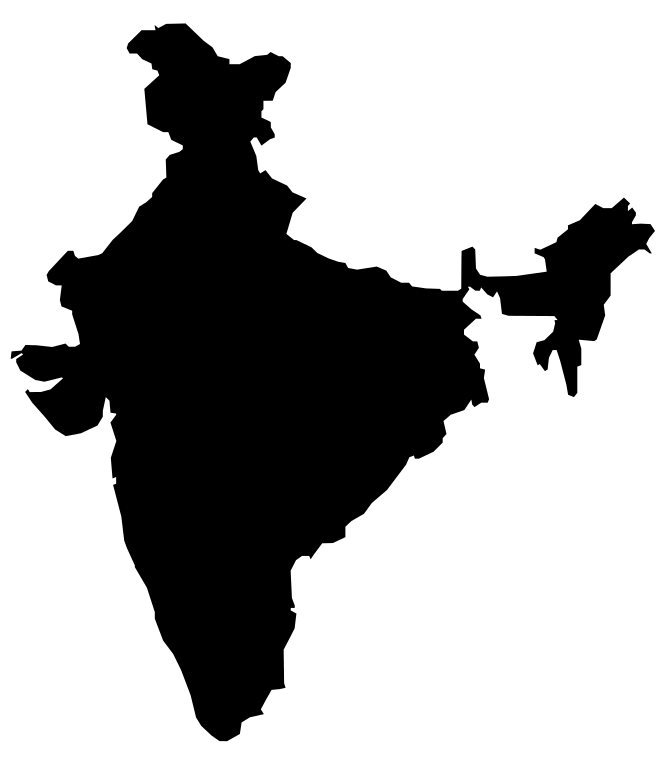

A country that code-switches
An auto driver in Hyderabad will happily move between Telugu, Dakhni Urdu, Hindi and English in a single fare. This is not chaos. It is one of the most sophisticated multilingual systems in the world, running quietly every day.
The script map
India uses at least eleven major scripts. Devanagari for Hindi and Marathi, Bengali-Assamese in the east, Tamil, Telugu, Kannada and Malayalam in the south, Gurmukhi in Punjab, Gujarati, Odia, Meetei Mayek in Manipur and Ol Chiki for Santali.
Yet the numbers on a currency note are printed in seventeen languages, and every citizen can read at least one of them.
Diversity as a design principle
The Constitution did not pick one language and impose it. It built a federation where states draw their own linguistic boundaries. That decision, made in 1956, is a large part of why India held together.