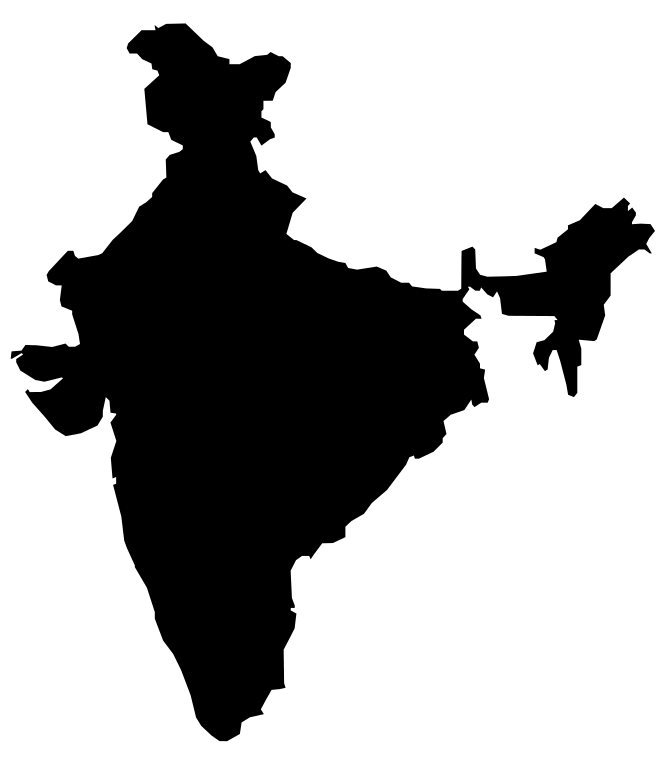

The oldest idea in Indian foreign policy
In 1947 a newly independent, poor nation chose not to join either Cold War bloc. Critics called it fence-sitting. Seven decades later the same instinct, now called strategic autonomy, lets India buy Russian oil, build semiconductors with America, train with France and host the G20 in the same year.
Multi-alignment in practice
- QUAD with the United States, Japan and Australia to keep the Indo-Pacific free and open.
- BRICS and the SCO to keep a seat at non-Western tables.
- I2U2 and the India-Middle East-Europe Corridor to link the Gulf, Israel and Europe through Indian ports.
- Neighbourhood First and Act East to anchor South and Southeast Asia.
Why it works now
A nation of 1.4 billion with the fifth-largest economy, the fourth-largest military and a navy that patrols from the Gulf of Aden to the Malacca Strait is not a swing state. It is a pole. Everyone needs India more than India needs any one of them.
India is not sitting on the fence. India is sitting on its own ground.
The challenge ahead is the northern border, where strategic patience and infrastructure in Ladakh and Arunachal must do the work that slogans cannot.